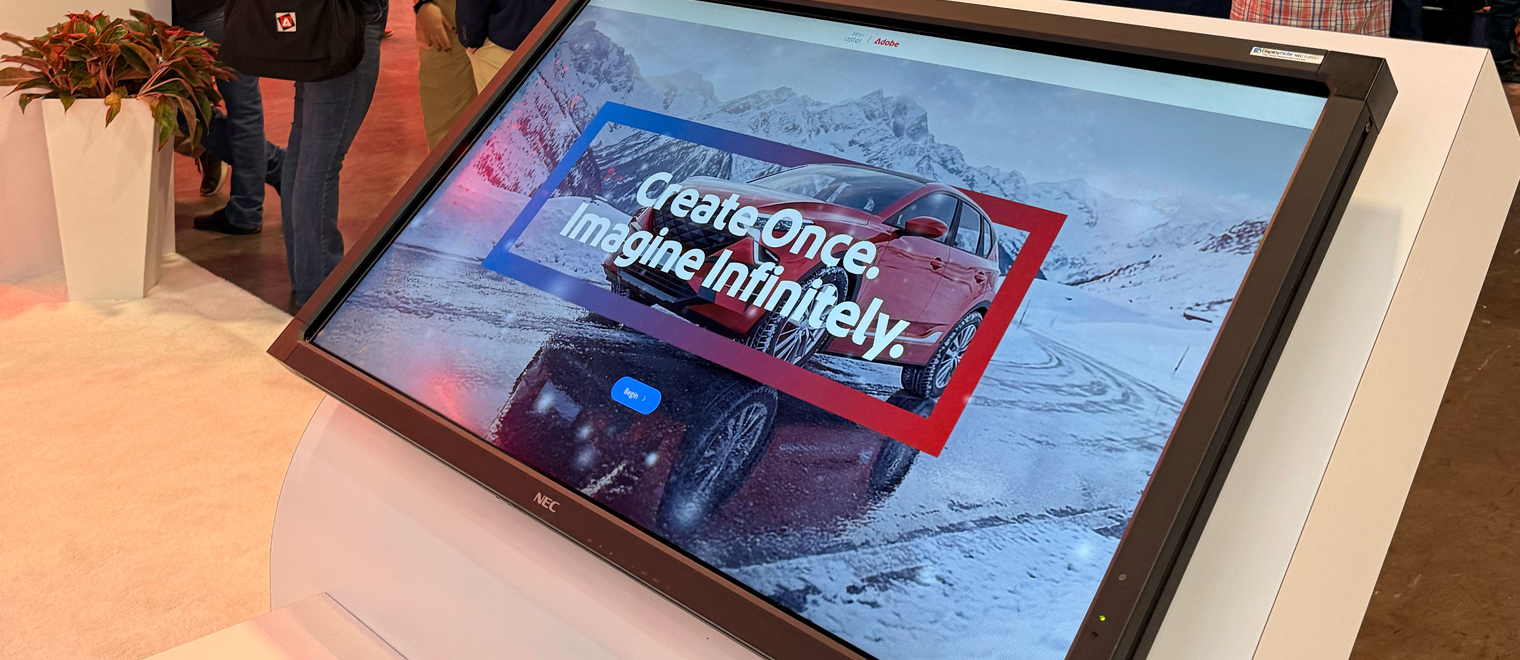
For Adobe Summit, I worked directly with Adobe’s team to design an interactive Digital Twin experience that demonstrated how 3D product data can become the foundation for scalable content creation. The project was also a collaboration with Infosys Aster and a celebration of their and Adobe's recent commitment into a new partnership.
The goal was to take a complex technical concept and turn it into something people could understand simply by interacting with it.
Creative Direction, UI Design, Experience Design
Digital Twins are powerful, but they can be difficult to explain. I wanted the experience to move beyond simply showing a highly detailed 3D model and instead demonstrate what becomes possible when that model is treated as a source of truth for an entire ecosystem of content.
The challenge was creating an experience that could communicate this idea quickly, was sophisticated enough for an Adobe Summit audience, and it needed to work as both a self-guided experience and a compelling demonstration for someone encountering it for the first time.
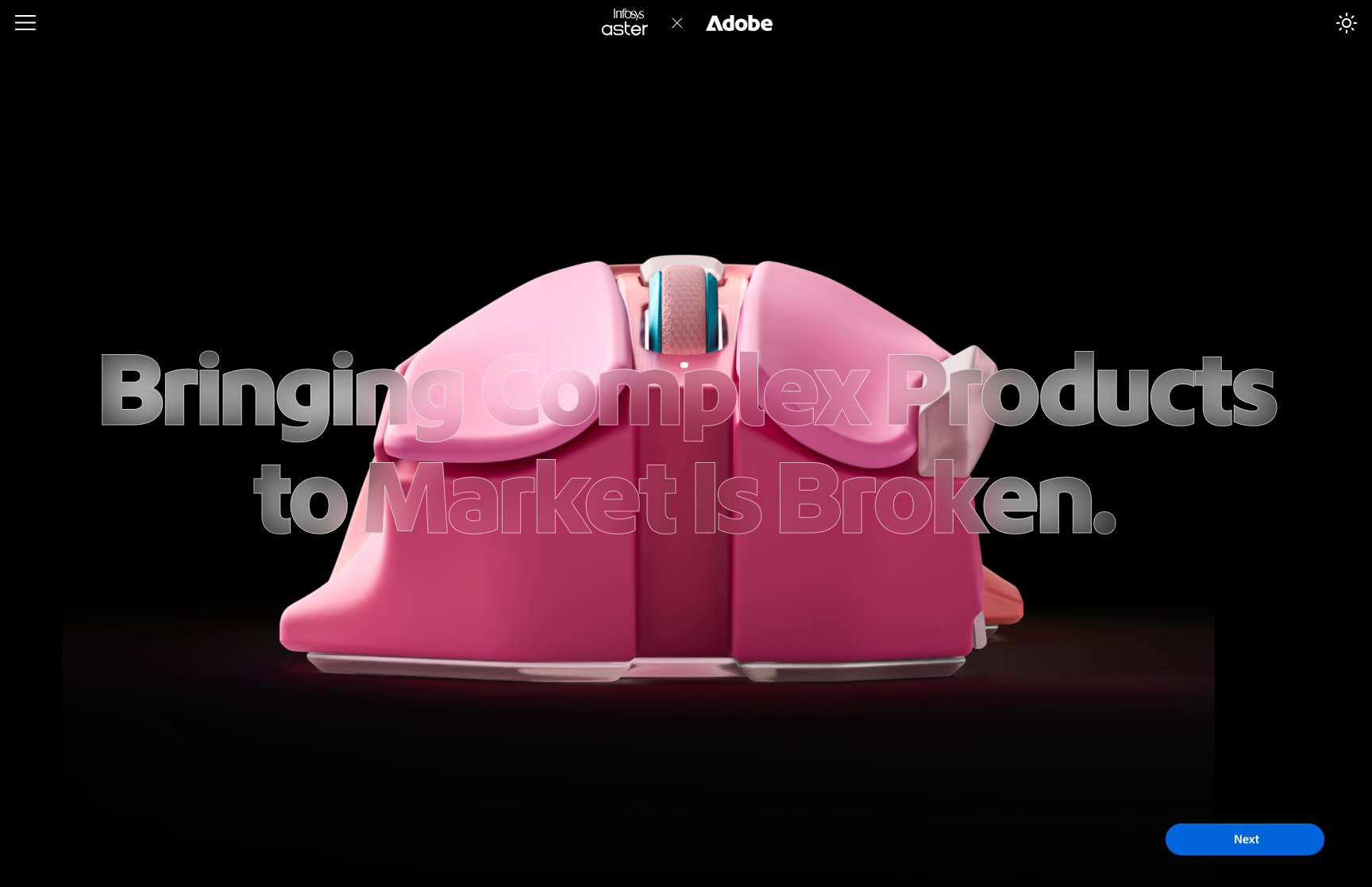
I worked closely with Adobe’s team throughout the project, translating the technical capabilities of the Digital Twin into an experience that could work in the context of Adobe Summit.
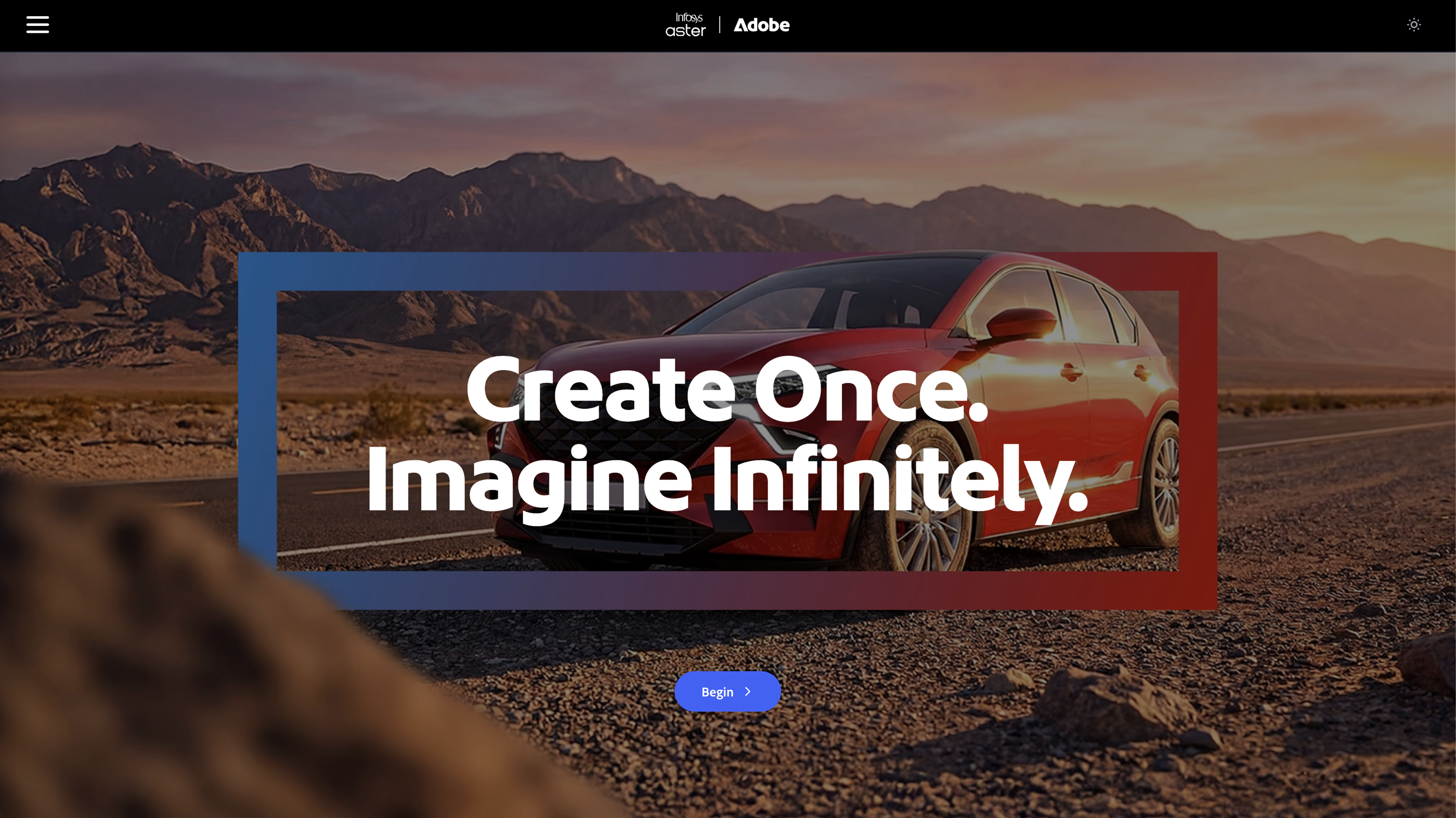
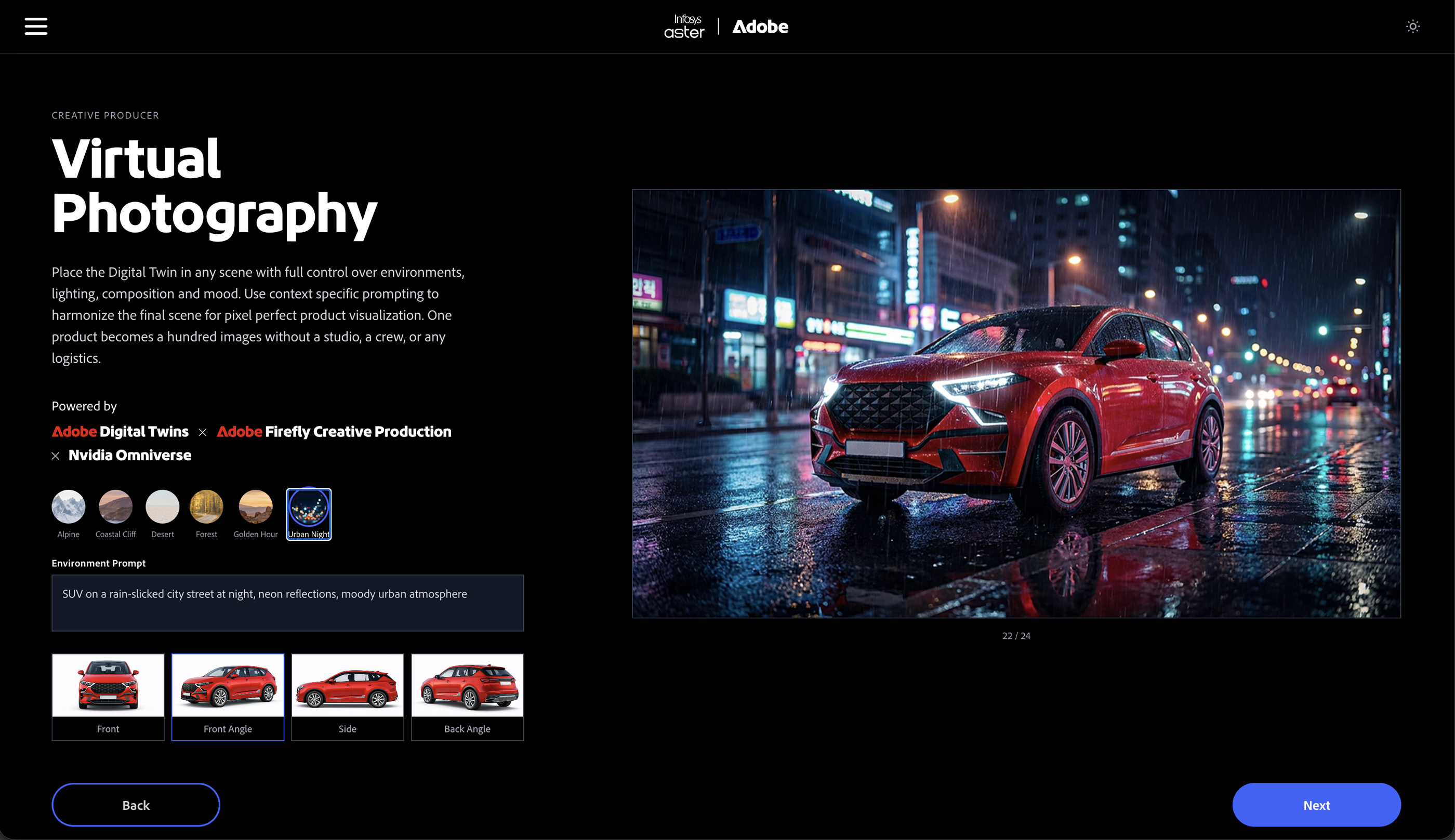
Users could explore different environments, perspectives, lighting conditions, and creative scenarios while maintaining the same underlying product. This made the core concept immediately visible: the product only needs to be built once, but the content around it can continue to evolve.
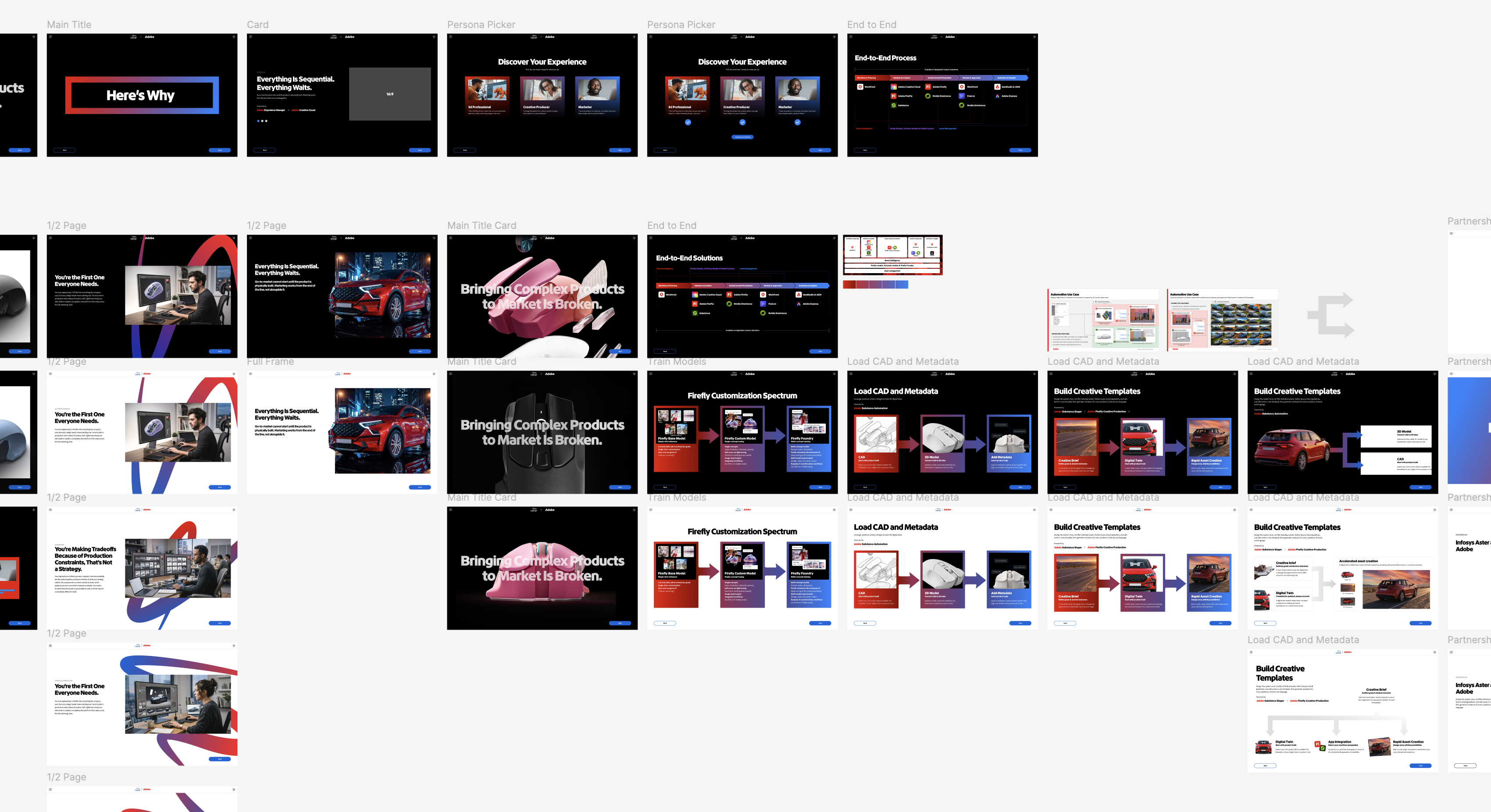
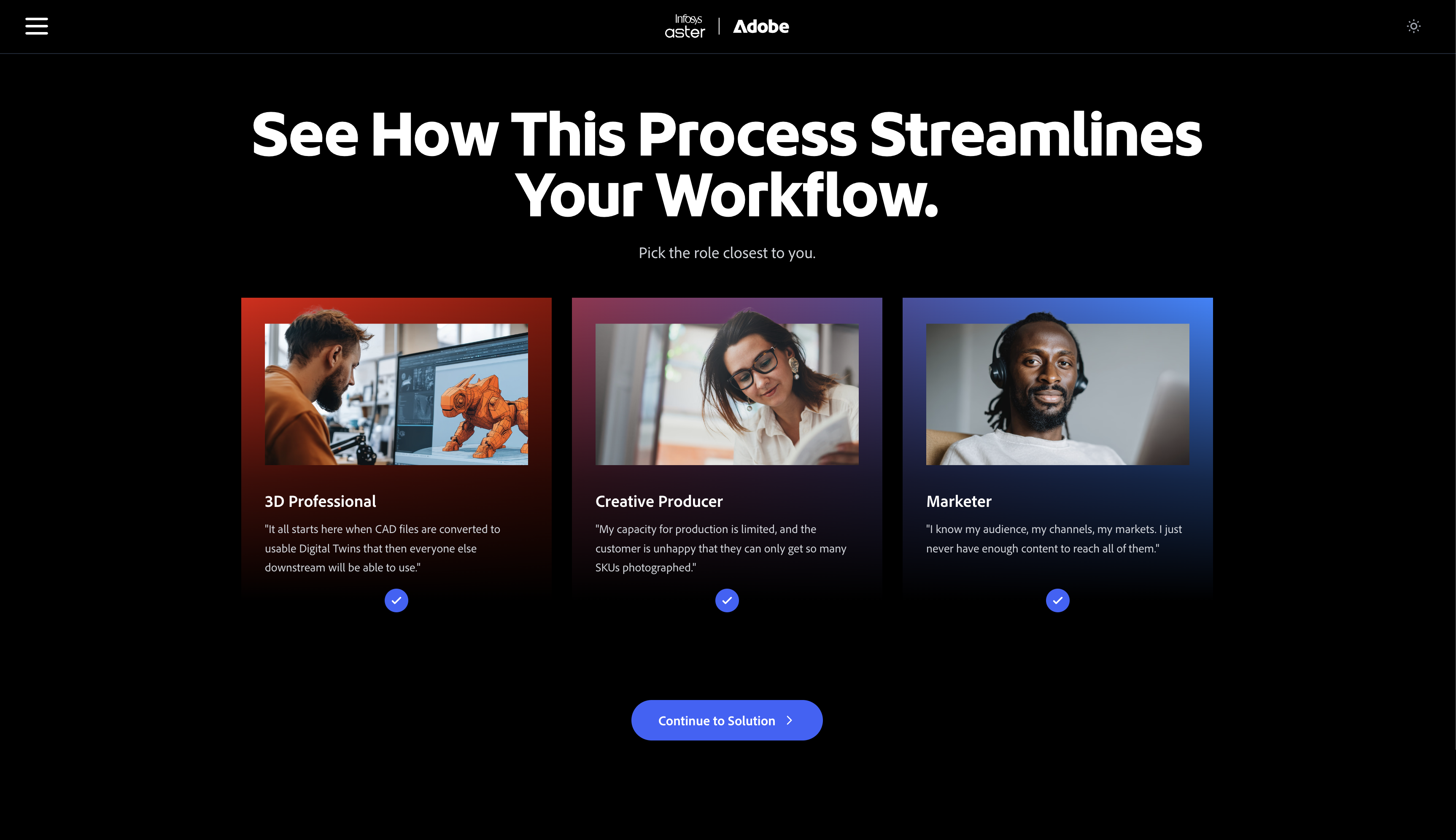
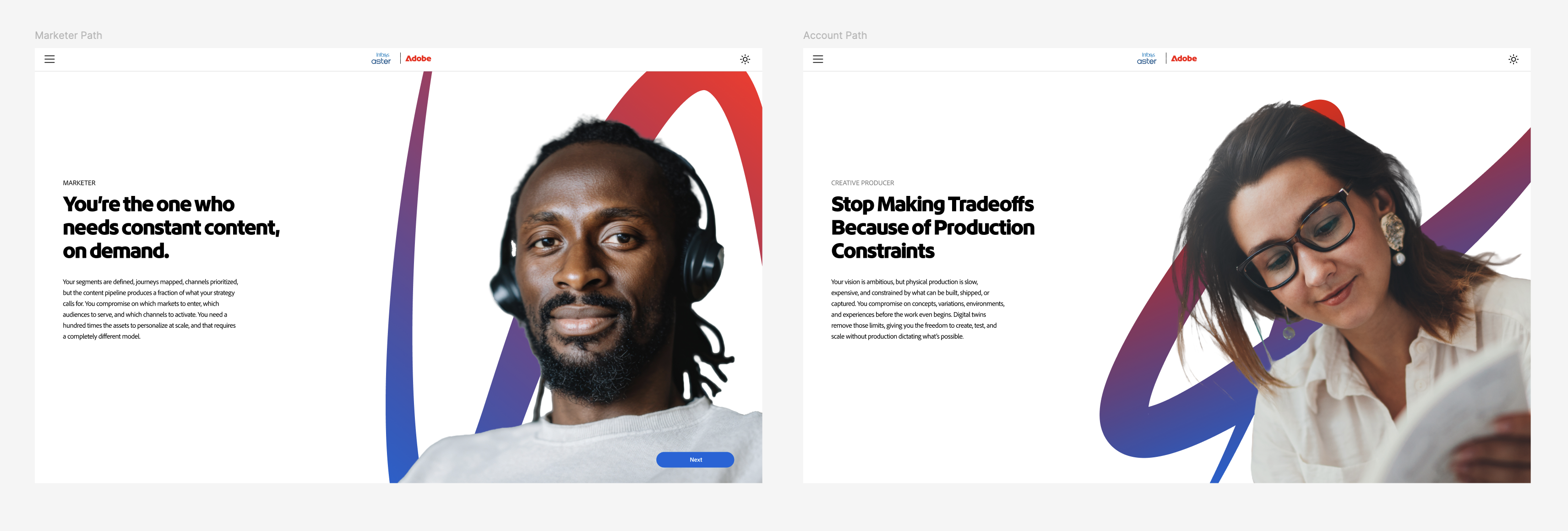
The larger idea behind the demo was that a Digital Twin isn't simply another 3D asset. It can become the foundation for an entirely different approach to creating product content.
Instead of repeatedly recreating a product for every campaign, environment, or channel, the Digital Twin creates a reusable source that can generate new experiences from the same underlying product.
The final experience gave Adobe Summit attendees a tangible way to understand Digital Twins without needing to understand the technology behind them. Instead of telling people what a Digital Twin could do, the experience let them see it happen.
For me, the project was an opportunity to explore what happens when emerging technology is treated as an experience rather than a feature—and how thoughtful design can make incredibly complex systems feel simple, intuitive, and immediate.

I’m driven by curiosity and a desire to understand how things work. I ask questions, challenge assumptions, and connect ideas that may not seem related at first. Whether leading a team or working hands-on, I look for thoughtful ways to bring clarity to complex problems and move the work forward.
I’ve built my career by adapting, experimenting, and staying open to better ways of working. From new tools and technologies to rapid prototyping and AI-assisted workflows, I’m always learning—but innovation only matters when it improves the process, strengthens the work, or creates real value.