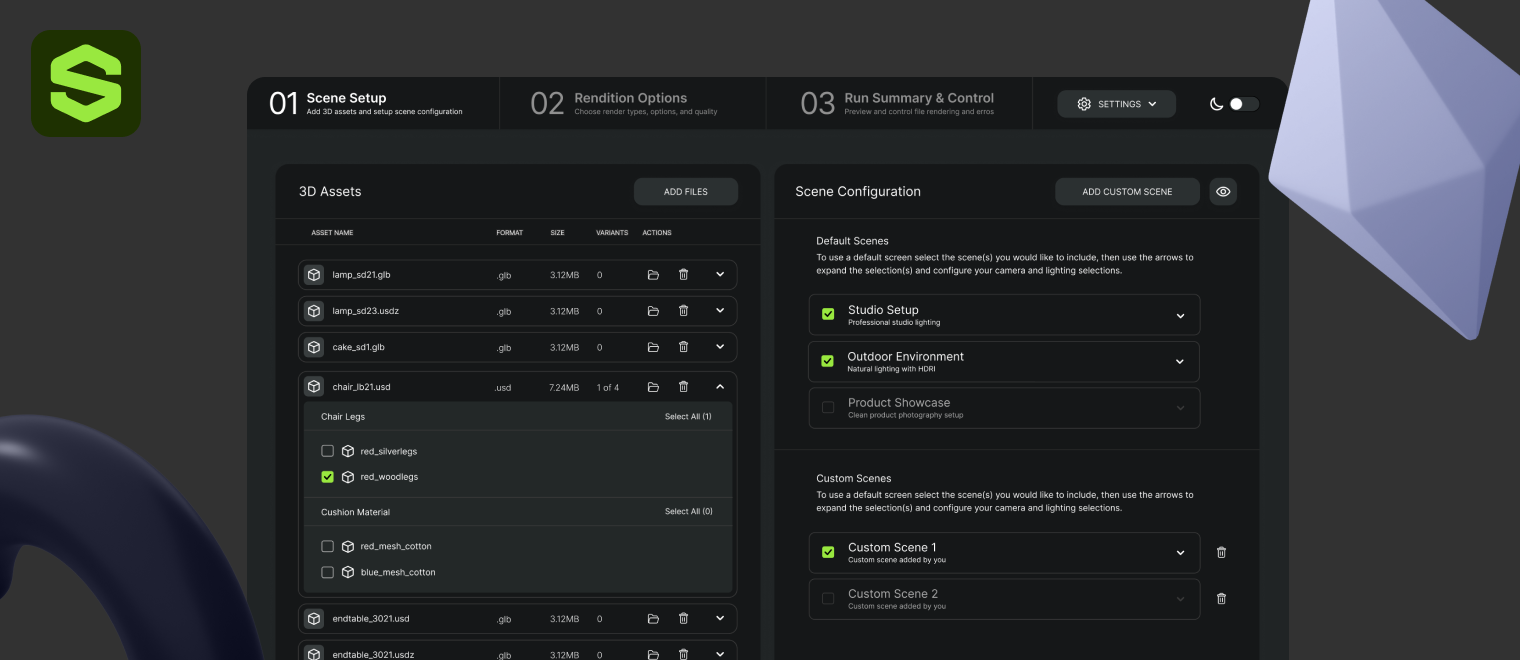
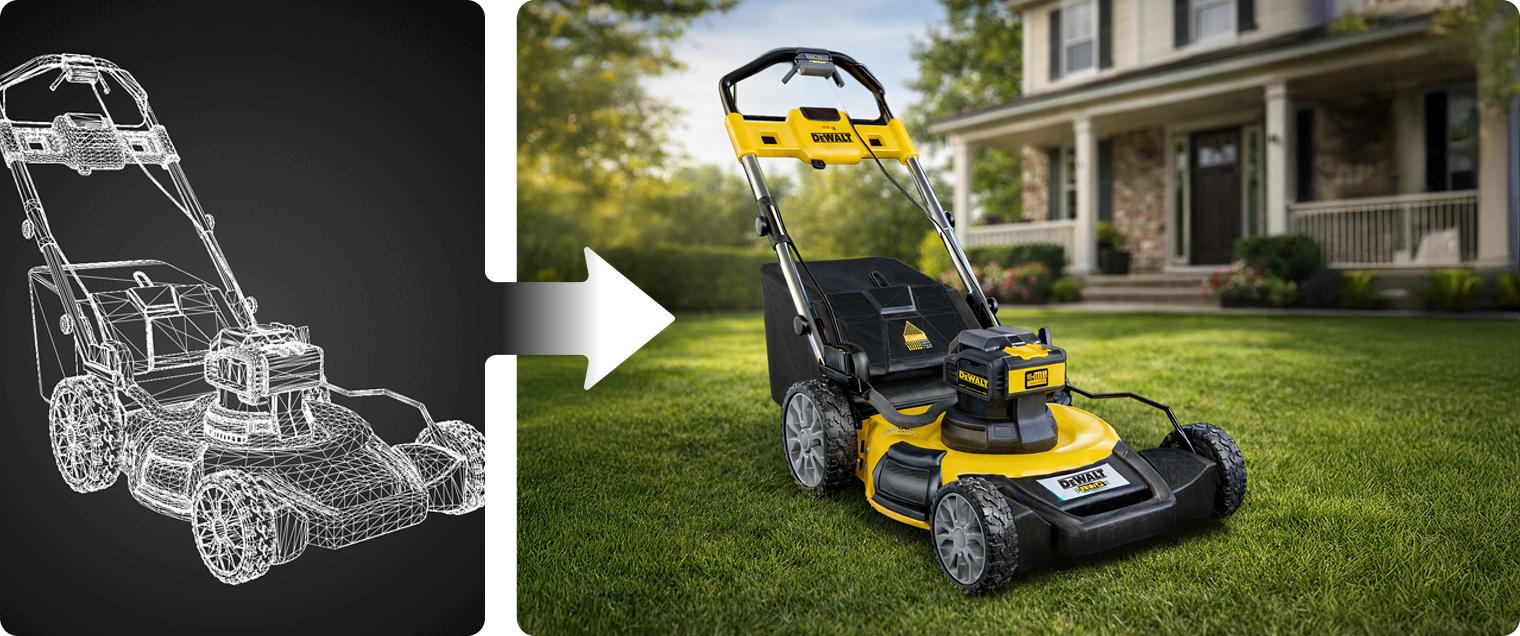
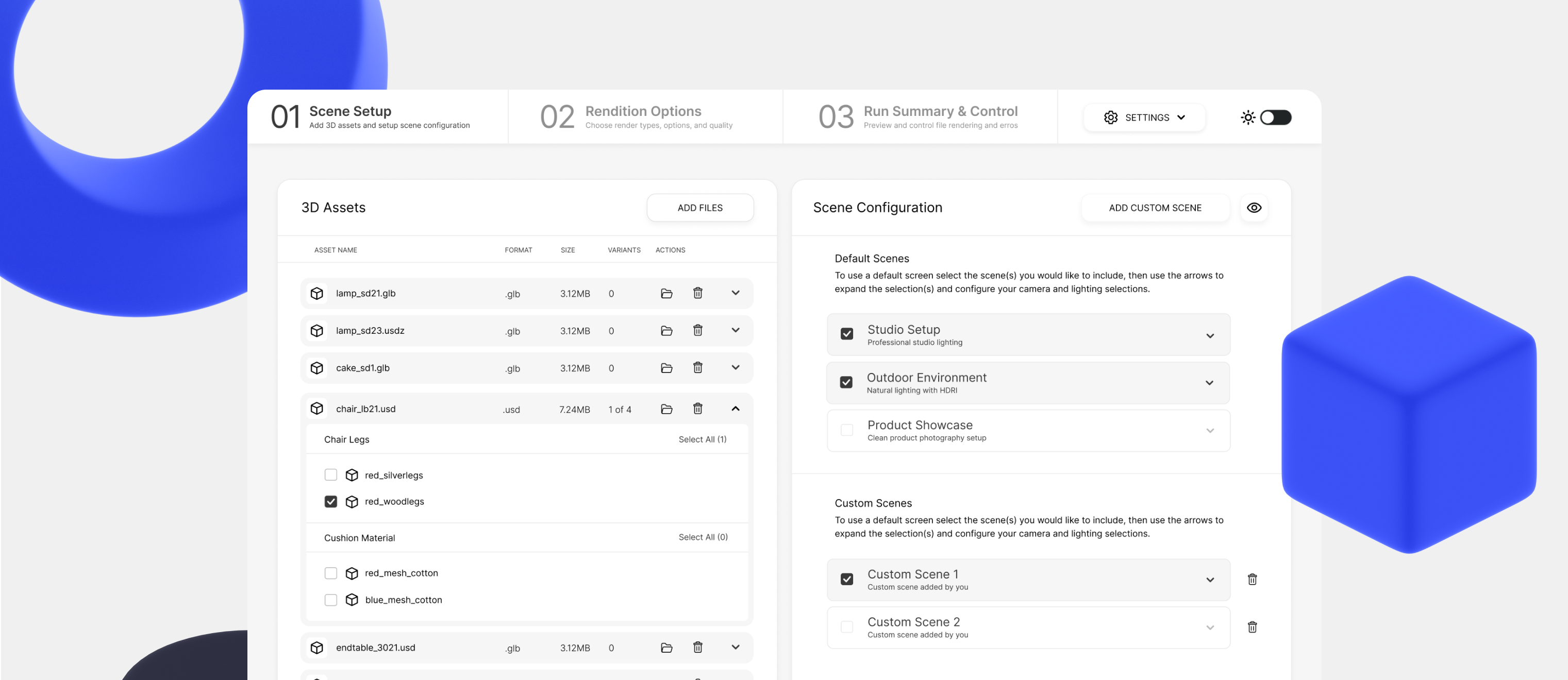
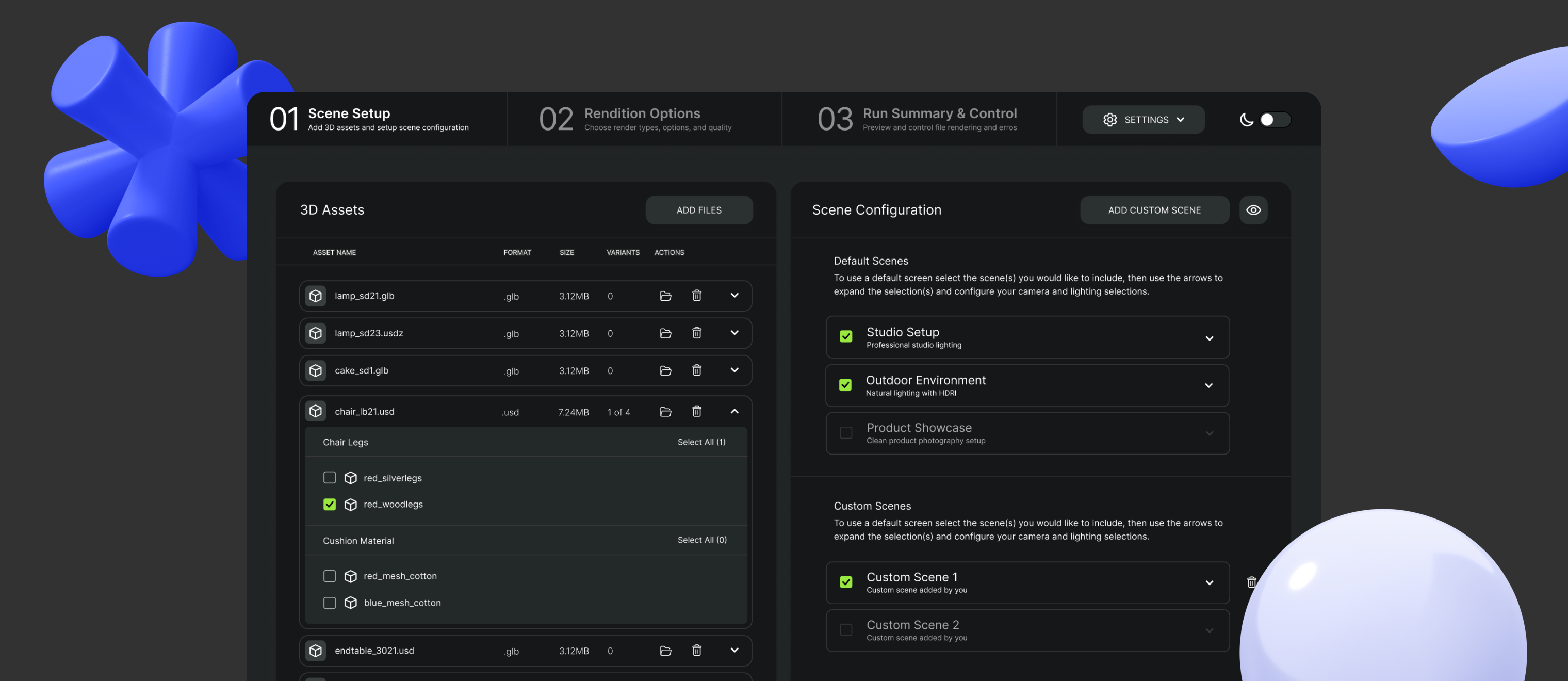
Batch Render Tool is a professional workflow for Adobe Substance teams to preview, configure, validate, and queue large sets of 3D product renders. Marketers can work with complex models, scenes, cameras, variants, and output settings through a guided three-step process, while the underlying 3D complexity stays manageable.
Currently in active development, the app is functioning and being fully tested by companies interested in the licensing of this product.
Product Strategy, Design System, Design Engineering
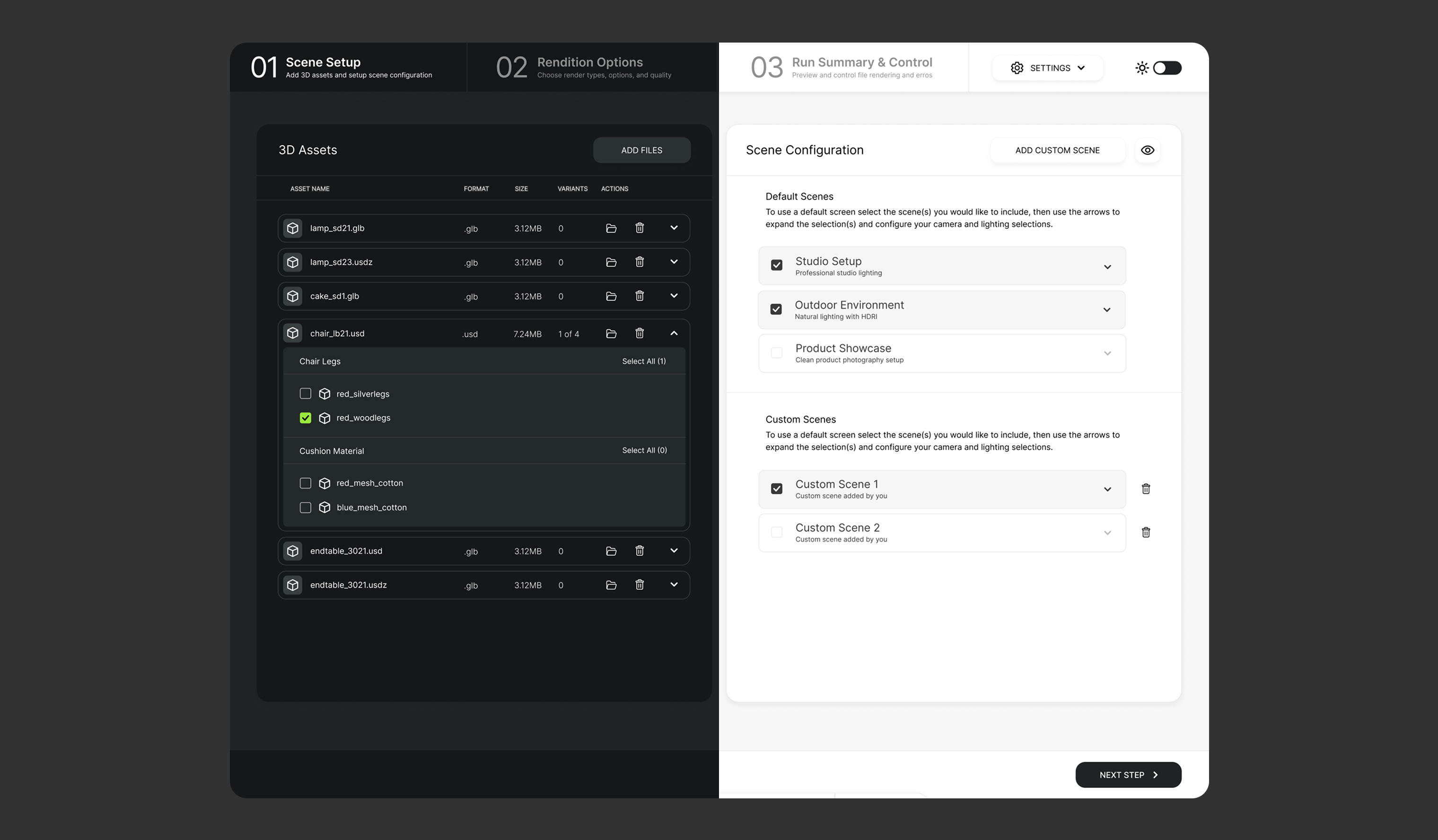
I led the UX and interface design around a core challenge: making a powerful rendering pipeline accessible to marketers without oversimplifying the professional workflow.
The experience centers on previewing exactly what will be rendered, configuring variant and output combinations, and validating everything before sending a batch to the render queue.
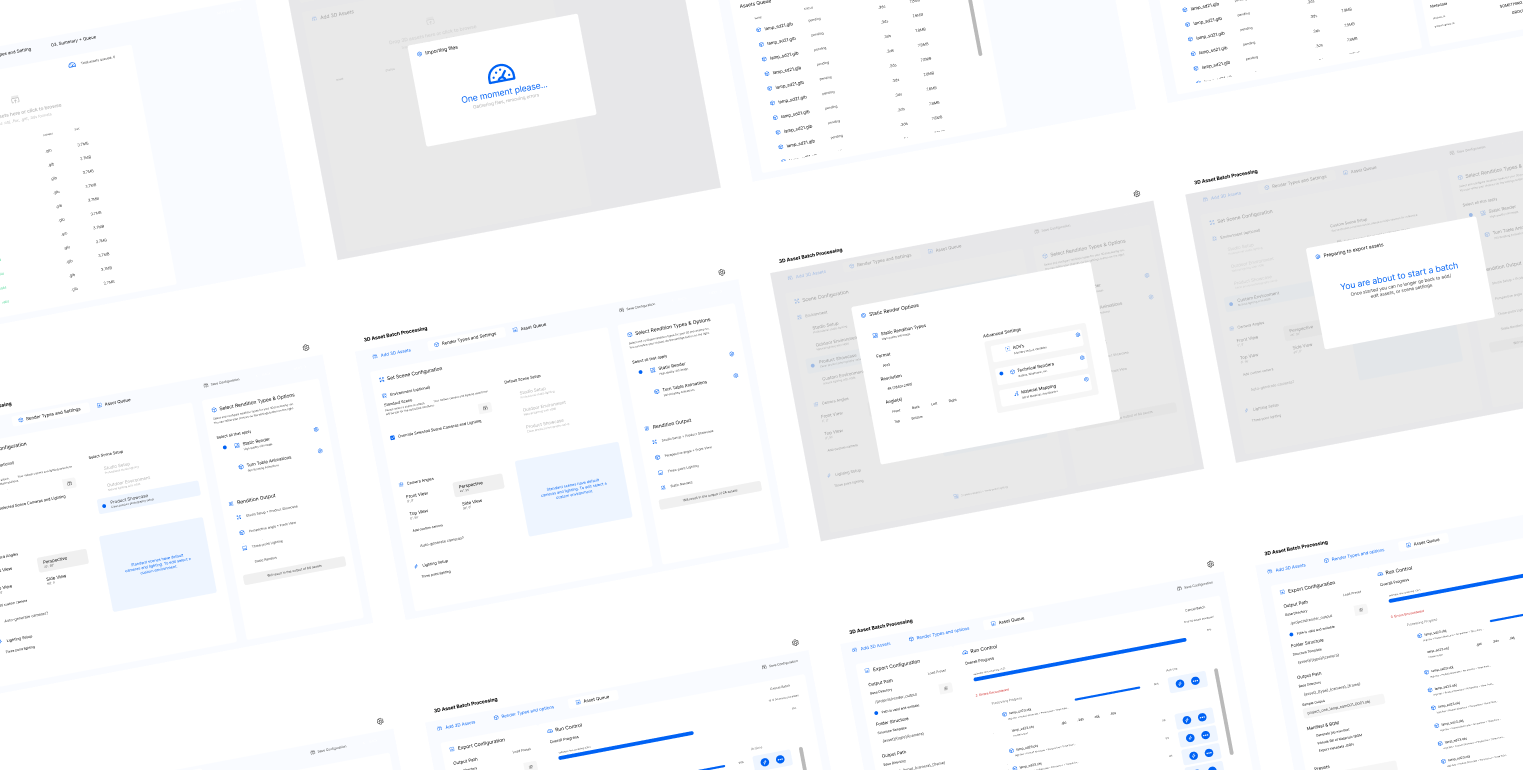
Time is always of the essence, and while the ask was unique, we started the process by taking user stories and journeys and mapped those out quickly by utilizing AI.
After we crafted user journeys, to better understand the needs and challenges around this software, we plugged them into UX Pilot to rapidly plan out the application. This propelled the project forward, getting us something to play with while clarifying assumptions.
As part of this process, we also researched existing software for best practices before further refining and then creating a prototype. I kept this in mind as I started to lay out final comps, utilizing Adobe's Design system principle's and guidelines
Having those guidelines in place made it easier to utilize AI to ideate and iterate new features. We could fully test client requests and our own internal ideas in days and gain approval prior to costly development and implementation.
.png)
I’m driven by curiosity and a desire to understand how things work. I ask questions, challenge assumptions, and connect ideas that may not seem related at first. Whether leading a team or working hands-on, I look for thoughtful ways to bring clarity to complex problems and move the work forward.
I’ve built my career by adapting, experimenting, and staying open to better ways of working. From new tools and technologies to rapid prototyping and AI-assisted workflows, I’m always learning—but innovation only matters when it improves the process, strengthens the work, or creates real value.